
Banks maintain high & restrictive interest rates, despite BOJ policy rate reductions; business interest groups urge them to cut rates
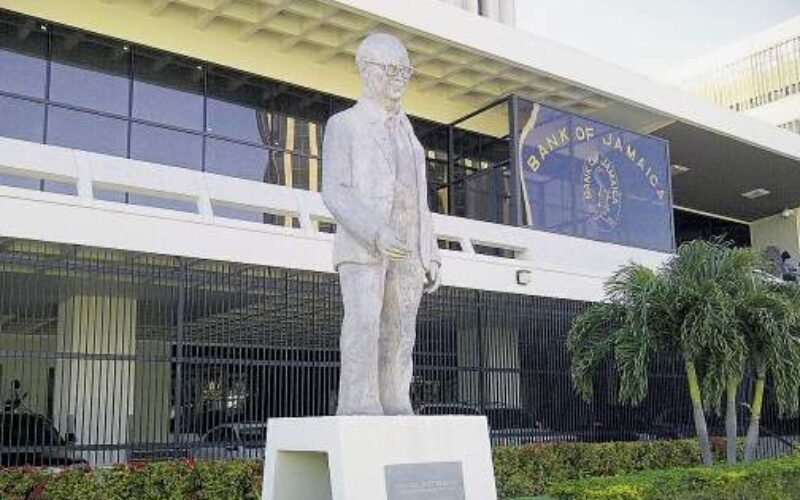
Banks maintain high & restrictive interest rates, despite BOJ policy rate reductions; business interest groups urge them to cut rates
The Bank of Jamaica (BOJ) has noted that interest rates on bank loans and other credit terms at financial institutions across the country remain high and restrictive.
It also notes that banks may have room to make downward adjustments in their rates.
The Central Bank made the statement amid the lowering of its benchmark policy rate for the fourth consecutive time in 2024.
In a statement, the bank explained that its Monetary Policy Committee, at its meetings on December 18 and 19, assessed that the prevailing economic environment is conducive to a further easing of its monetary policy stance.
As a result, it unanimously agreed to reduce the policy rate by 25 basis points to 6.00% per annum, effective tomorrow, December 23.
The bank explained that the decision to ease monetary policy is based on inflation becoming anchored in the target range.
It said despite the impact of recent adverse weather on prices, inflation is expected to remain in the target range.
Annual headline inflation as of November 2024, as reported by the Statistical Institute of Jamaica (STATIN), was 4.3%, representing a reduction from 7.4% at January 2024.
Over the next eight quarters, inflation is likely to remain within the bank’s target range.
There, however, remains a risk to the inflation projection in the context of the uncertainty associated with the potential changes to economic policies among Jamaica’s main trading partners, mainly the United States.
However, the timing and the extent of the policy changes are still highly uncertain.
The BOJ said the scope for further monetary policy easing will depend on the trajectory of inflation.
It added that despite the positive trends in inflation, it recognizes that consumer prices in Jamaica are still high.
In this context, the bank said it remains committed to its primary mandate of maintaining low, stable and predictable inflation.
Meanwhile, several business groups have joined the BOJ in emphasizing the urgent need for commercial banks to reduce their interest rates.
The call came from the Jamaica Manufacturers and Exporters Association (JMEA), the Private Sector Organisation of Jamaica (PSOJ) and the Jamaica Chamber of Commerce (JCC).
In a joint statement, they urged commercial banks to immediately reflect the rate reductions in their lending practices.
They said the reductions are essential to ensuring that the benefits of monetary policy are effectively transmitted to businesses and consumers.
The business groups said micro, small and medium-sized enterprises (MSMEs), which are pivotal to Jamaica’s economic framework, require affordable financing to boost productivity, drive innovation, and create sustainable jobs.
They also recommended that the BOJ collaborate with the bankers’ association to address inefficiencies in the monetary transmission mechanism.
The business groups reiterated that commercial banks must align with the BOJ’s policy direction by lowering lending rates and expanding access to credit, especially for MSMEs.
They added that affordable credit is critical to driving productivity, innovation, and job creation.