
Local manufacturers urged to brace for tariff impact
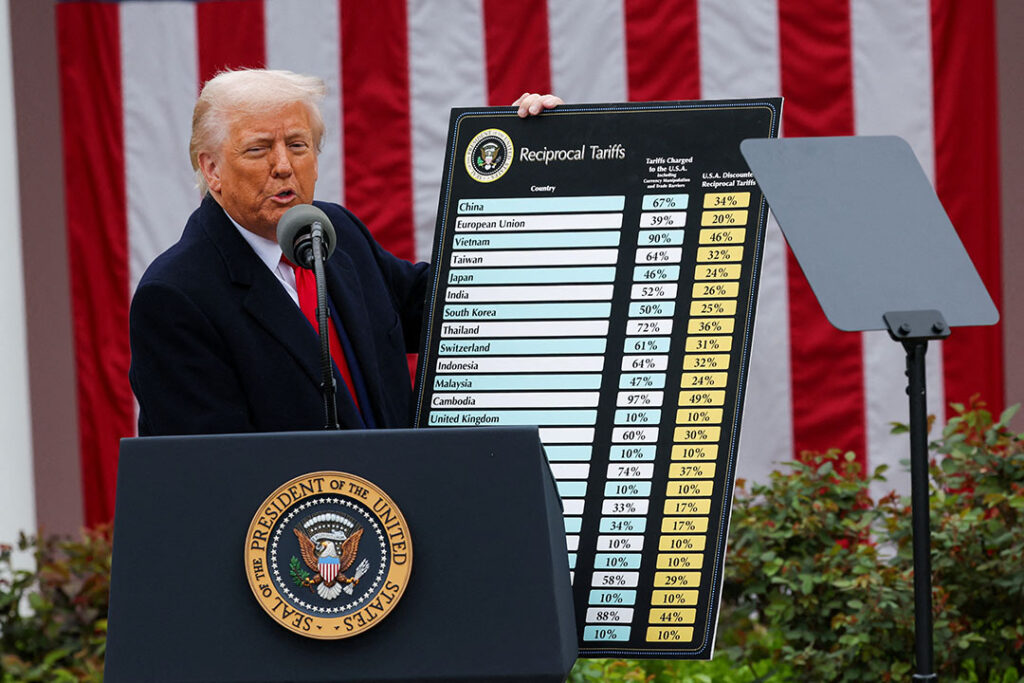
LOCAL businesses are being advised to prepare for higher prices and seek out opportunities as global tariff shifts begin to reshape trade dynamics.
Speaking during the Adventist Laymen’s Services and Industries (ASI) Economic Outlook Forum on Monday, Finance Minister Fayval Williams warned that Jamaica’s open economy leaves it particularly exposed to external shocks, especially from recent tariff changes imposed by the United States.
“As a first order, there will be an increase in prices,” she said. “As a second order, businesses and shipping lines will begin to reassess their business to see if it makes sense for them to continue to go this route versus that route.”
“It may take some time, maybe six months or a year, for people to regain their competitive position locally and internationally,” she said.
Against this backdrop, the Bank of Jamaica (BOJ) has paused its plan to lower interest rates. Williams explained that with inflation risks still present, the central bank is closely monitoring price movements. If inflation rises beyond its target range, interest rate hikes could be used to manage the situation. However, Jamaica Manufacturers and Exporters Association (JMEA) President Sydney Thwaites argued that now is the time for the Government to consider lowering interest rates to support local firms seeking to invest in production and reposition themselves in global markets.
Speaking on behalf of the JMEA and other private sector players, he said reduced interest rates would allow firms to access working capital and reinvest in their operations, something that is becoming more difficult with high borrowing costs.
He added that easing monetary policy could support business expansion at a time when other firms around the world may be holding back on investment. This, he said, would help local companies strengthen their competitive edge.
Thwaites acknowledged Jamaica’s historical struggles with economic growth but noted that the current macroeconomic environment of low debt, declining unemployment, and reduced crime has created a more favourable climate for business confidence and investment.
He also pointed to Jamaica’s potential to benefit from nearshoring, particularly as global companies seek new supply chain solutions in response to shifting trade dynamics.
“I think we have an opportunity to be responsibly aggressive and take advantage of the crisis,” said Thwaites.
He argued that Jamaica is well-positioned to benefit from redirected global trade due to its strong port infrastructure and reliable shipping services, which he described as among the best in the region.
“We are only competing with American-made and American raw material source goods in America, that’s our competition. So while I have no doubts that we’re going to see some impacts and we will see some challenges, let’s be ready to take advantage of some of the opportunities,” he stressed.
Despite concerns over tariffs, he maintained that average rate of 10 per cent imposed on Jamaica by the US remains competitive globally and does not place the country at a disadvantage.
Building on this point, MSME Alliance President Antoinette Hamilton encouraged local businesses to view the current environment as a chance to strengthen their competitive edge, especially where international competitors are facing higher trade barriers. She urged companies to explore programmes like Jampro’s Export Max, which is currently accepting applications from a new cohort of businesses seeking to expand production and access new export markets.
Hamilton stressed that preparing MSMEs for export requires more than market access, it also demands capacity building and access to financing. She called for more grant funding initiatives that support not just planning but also implementation, to help small businesses execute growth strategies more effectively.
“The equity financing takes some time to implement, and right now we can’t wait, we have to act now,” she said.
Given the broad application of the tariffs imposed by the Donald Trump Administration in the United States, Williams added that local exporters may find limited alternatives to bypass the increased duties, which is expected to push up import costs. As a result, consumers will face higher prices without corresponding wage increases, forcing them to make tougher decisions about their spending priorities.
KINGSTON, Jamaica – July 1, 2026: Less than a week after being re-elected to lead the Jamaica Manufacturers and Exporters Association (JMEA), President Kathryn Silvera has
Kingston, Jamaica – February 4, 2026: The Jamaica Manufacturers and Exporters Association (JMEA) is appealing to importers, including individuals and organizations with
Kingston, Jamaica – December 12, 2025: With hundreds of manufacturers and small producers still reeling from the devastation caused by Hurricane Melissa,
Mr. Thwaites has over 28 years of experience in financial services, petrochemicals, and consulting, with a global reach spanning the USA, Canada, Europe, Asia, and the Caribbean. He co-founded Lubricating Specialties Company Jamaica in 2015, revitalizing the local lubricant manufacturing industry. With a solid track record of organizational leadership, Mr. Thwaites has developed and negotiated long-term partnerships with major global companies, closed various debt and equity financing deals, and delivered consistent growth and returns. Known for his dynamic
leadership, trustworthy and ethical approach, and keen market understanding, he has served as CEO of LSC USA and held advisory roles with the U.S. Export-Import Bank and the Petroleum Quality Institute of America.
Apply for the necessary licenses, permits, and certifications at the following Agencies:
Bureau of Standards Jamaica (BSJ): Consult with the BSJ for guidance on processed food prior to exporting. This includes information on standards, labelling and market requirements.